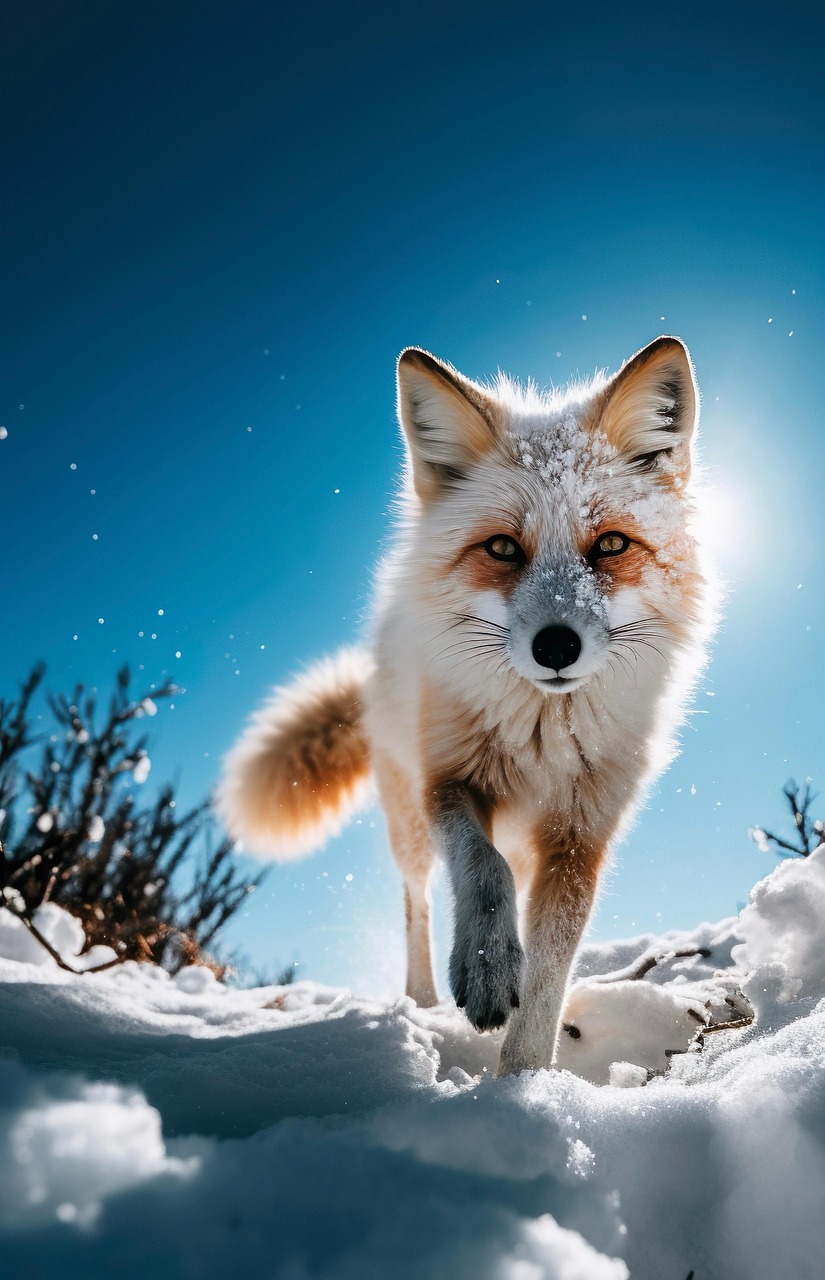
Pixabay License for fox photo (photographer Jeanette Atherton)
Every day, our human activities create hazards for wildlife. Roads, houses, technology, and speeding cars have replaced the natural rhythms and spaces wild animals rely on. But this doesn’t have to be a tragedy of our own making. By becoming more aware, we can take simple, essential steps to make the world a safer place for the creatures who share our planet. This post will share some of the most important actions we can take, starting with lessons I learned in my own backyard. My first and most heart-breaking lesson came when I moved to a house, proving that even a barrel of water can contain hidden dangers.
Several years ago, I rented a home surrounded by a lush meadow, a truly magical place where my cat, Minny Mouse, had a panoramic view of wildlife, from deer to songbirds. Minny’s favorite activity was watching a chipmunk that darted across the patio, constantly scurrying for seeds and nuts. Chasing him back and forth along the windowsill, she was convinced she would finally catch him.
A few weeks after we moved in, I saw Minny calmly sitting by the window and wondered why the chipmunk wasn’t up to his energetic routine. When the chipmunk didn’t appear, I grew concerned and investigated his mysterious disappearance.
Tragedy struck when I found the poor creature had drowned in a large barrel of water that the landlord had left on the patio. I scooped the body out and gently laid him to rest in the meadow. I carry that sadness with me, and it taught me an immediate, lifelong lesson: never leave water containers open and unattended. Now, I either turn barrels and buckets upside down, or, if the water is specifically for wildlife to drink, I always put a large stick or branch in the container. This simple addition acts as a ramp, giving smaller creatures a way to climb out and escape a tragic drowning.
The danger of standing water extends to swimming pools. Even a small frog or a tired songbird can get trapped. If you have a pool, you must have a safety mechanism for wildlife and amphibians. Consider installing a Frog Log, Skamper-Ramp, or other boarding steps. These simple safety precautions save lives. (Link to an article about swimming pools and safety for wildlife: https://www.humanegardener.com/wildlife-and-swimming-pools/)
Our responsibility to keep our property safe also extends to removing hazardous debris we leave behind, especially near natural water bodies.
| While serving on the Environmental and Wildlife Rescue Committees in Montgomery Village, Maryland, I saw first-hand one of the most devastating human-caused hazards: discarded fishing line. This invisible enemy is a major source of deaths and debilitating injuries for birds, waterfowl, and turtles. The issue of fishing line entanglement is a serious danger that comes with devastating consequences. I was horrified watching a man at a local pond hook a turtle, only to violently jerk the hook out and toss the injured animal back into the water without a second thought. That callous disregard for life is a tough thing to witness, but it reinforces the need for our community to be vigilant. Whether you fish or not, if you are near a body of water, always be on the lookout for abandoned line. If you see it, please carefully gather it up, cut it into small pieces, and secure it in a proper trash receptacle. Another hazard that silently kills millions of birds every year is found not on the ground, but in the windows of our homes. |
One simple remedy, to prevent these tragic deaths – is to put decals on your windows. These decals make the glass visible to birds by breaking up the reflection, showing them there is a solid surface, not just empty sky. This helps to re-direct the birds away from, fatal collisions. I have seen birds break their necks and suffer fatal injuries too many times when they fail to see a window and strike it headfirst. Amazon.com, Walmart.com and https://www.theaudubonshop.com/ are a few places you can purchase bird saving window decals.
The scale of this issue, however, extends far beyond residential homes, reaching the tall towers of our cities. According to the American Bird Conservancy migrating birds strike windows and are dying by the millions in the USA (https://abcbirds.org/news/bird-building-collisions-study-2024/.) To help avoid this catastrophe buildings can use protective measures which include turning off unnecessary lights during migration, especially at night; and adding decals to windows, using patterned films, or UV-patterned glass to prevent collisions.
As we work to protect wildlife from the world humans have built, we must also consider the threat posed by our beloved pets—our own domestic cats.
As a cat owner and a lover of nature, I understand the joy of watching a cat enjoy the outdoors. However, the decision to allow a cat to free-roam is perhaps one of the most critical choices we make regarding wildlife safety. Two humane solutions that I have used to let my cats spend time in nature are to walk them on a harness or let them sit in a portable pen.
My cat Shadow loved to be walked on his harness and spend time in his outdoor pen. As an additional precaution I bought Shadow a GPS tracker that I attached to his collar, in case he slipped out of his harness. When I used his portable outdoor pen, I always sat with him. He was never left unattended while in the pen. Often we sat by the edge of the forest and watched the deer and listened to the birds.
While living atop a huge hill near the Blue Ridge Mountains, Shadow and I went out on an adventure with him on his harness. As we approached a butterfly bush adorned in purple blossoms, I told Shadow, “We are at the top of the world on this spring evening!” And as the sun set, with pink hues illuminating the sky, Shadow looked around at all the magic nature provided.
To prevent injuries and deaths of birds, rabbits and other wildlife, I encourage people who want their cat to get outdoor time to use a harness or portable pen. This allows your cat to get vital time in nature and can save many thousands of bird and animal lives. This is also safer for your cat who can otherwise be hit by a car, attacked by another animal or get lost. Your cat can still enjoy the wonders of nature without posing a threat to wildlife by being walked on a harness, spending time in an outdoor portable pen or “catio” (cat patio).
We’ve addressed hazards we can see, but what about the dangers that are carefully concealed? An invisible killer that is used far too often are toxic rodenticides. Whenever you see those black boxes around office buildings, restaurants, and houses you are looking at one of the worst dangers to domestic animals and wildlife. These boxes are often filled with anti-coagulant poisoning which causes a slow death by internal bleeding. Not only is this an inhumane way for rats and mice to die – non targeted species like chipmunks can suffer a terrible death if they crawl into the boxes and eat the bait.
Secondary poisoning occurs when non targeted species consume the bodies of animals poisoned by the rodenticide. Thousands of birds and animals die from these poisons. Once these rodenticides enter the greater eco-system they spread danger to other animals and birds.
I believe the use of poisons should be universally banned. They cause tremendous suffering and should be replaced with humane alternatives. Absolutely never use glue traps. These torture devices should be banned as well. Animals struggle in a vain attempt to free themselves from the glue. I have used cooking oil to release mice caught in glue traps (at places where I worked), and the mice are exhausted and injured from their desperate struggle to free themselves.
Humane catch-and-release traps are a great alternative to poisons, but they must be monitored regularly so the trapped animals don’t die from dehydration or starvation. Better yet, focus on exclusion work to keep mice from entering your home in the first place. By finding areas rodents can enter your house and blocking the portals with steel wool or boards, you eliminate the problem without resorting to traps or toxins. Property management companies need to get educated about the danger to animals, wildlife, and even children when they place these rodenticide black boxes around buildings. For more information, please see this excellent article by The Wildlife Center of Virginia:
This link takes you to the article – https://wildlifecenter.org/help-advice/wildlife-issues/rodenticide-poisoning-wildlife
In fact, the most common and dangerous threat to both domestic and wild animals remain a hazard we encounter daily: the roads we drive on.
One of the most important things you can do to help animals is to drive with a commitment to slowing down and staying aware. People drive as though the wild or domestic animal jumping out in front of their car is something shocking and unexpected. But it is the other way around. We are shocking the animals who are simply being forced to navigate our intrusions. We need to learn to think like the animals do. When you speed down the road, there is always the chance that an animal will dart out. I tend to stay in the right lane because I know that I drive slower, I always slow down when I see any animal. That does not mean suddenly jamming on brakes, it means that you slow down enough so that you have safe reaction time.
The agony of seeing any animal hit and injured on the road is painful to witness. I have seen deer hit and trying to drag themselves off the road. I have seen groundhogs bleeding and struggling to breathe after being hit. One of my other blog posts documents the tragedy I saw when I lived in Culpeper, VA when a ground hog was hit by a driver who could have easily avoided the animal. (Why A Ground Hog’s Life Matters – https://compassionatevoicesfornature.com/2023/02/).
I have avoided hitting countless animals by driving slower and always anticipating that an animal can suddenly jump into traffic. If we all drove with more respect for each other, and more awareness of the animals around us, there would be far fewer fatalities. I suggest carrying the number of your local emergency animal control to call immediately when you see an injured animal on the road.
Sadly in the case of deer, you usually need to call the police who are not equipped to humanely euthanize deer. This is an issue I have been researching for years. I would like to see progress made towards a more compassionate response to hit and injured deer. One idea would be for licensed wildlife technicians to be dispatched that could humanely euthanize (not multiple hit and miss bullets in an injured deer). I am working on a second book of true stories about my experiences with animals and nature. One of my stories is called, “Cry of the Deer.” This story goes much deeper into the need for proper humane response to deer injured and dying due to car accidents.
I hope you enjoyed reading this article and are prepared to help create a more humane world. Many wildlife species want us to hear their cry. Please let me know what your suggestions are for creating a safer world for all of nature and animals. I would love to hear your thoughts and ideas on this.
Copyright – Cynthia Fain – October 2025

 Compassionate Voices For Nature